Quick answer
A mobile hotspot is a feature on your phone that broadcasts a Wi-Fi signal using your cellular data. Any device that can connect to Wi-Fi — laptop, tablet, smart TV, another phone — can use your hotspot to get online through your cell plan.
Many plans include hotspot data, but the allowance is often much smaller than your regular phone data — and some plans use a speed cap instead of a strict data cap. After you hit your limit, speeds may drop, be restricted, or stay capped at a set speed until your next billing cycle, depending on the plan.
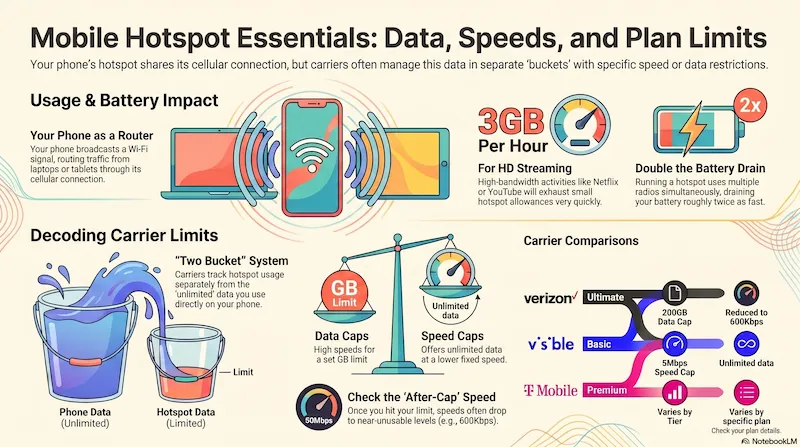
Infographic generated via NotebookLM from official carrier policy sources. Analysis by SwitchNinja Staff.
How a hotspot actually works
Your phone uses its cellular connection to create a Wi-Fi network for other devices. Traffic goes from your laptop to your phone, then from your phone through the carrier network to the internet. To your laptop, it looks like any other Wi-Fi connection — the difference is that the internet is coming through your phone instead of a home router.
To turn it on: Settings → Personal Hotspot (iPhone) or Settings → Hotspot & Tethering (Android — menu name varies by manufacturer). Set a password and share it with whoever needs to connect.
Hotspot data vs. regular data — what's the difference?
This is where most people get confused. Many plans advertise "unlimited data" but then separately limit hotspot usage. Here's why:
The two buckets on most plans:
Regular data — used when you browse, stream, or use apps directly on your phone. Some plans include a few gigabytes at full speed; premium unlimited plans may include dozens or even hundreds of gigabytes before any deprioritization.
Hotspot data — used when other devices connect through your phone. This bucket is usually much smaller (8GB–50GB) and tracked separately. When you exhaust it, hotspot speeds drop dramatically even if you still have regular data remaining.
How much hotspot data does each carrier give you?
Hotspot allowances vary a lot by plan — always check the exact tier before you buy. Here's a general look at the carriers SwitchNinja tracks:
| Carrier / Plan | Hotspot Policy | After the Limit |
|---|---|---|
| Verizon Unlimited Ultimate | 200GB | Reduced to 600Kbps |
| T-Mobile premium unlimited plans | Varies by plan | Some plans offer large or unlimited hotspot allowances |
| US Mobile premium plans | Varies by network & plan | Check current tier details |
| Visible+ | Unlimited at higher speed cap | Speed-capped, not data-capped |
| Visible Basic | Unlimited at set speed cap | Speed-capped, not data-capped |
| Mint Mobile | Varies by plan | Check exact allowance before buying |
| Cricket Wireless | Varies by plan | Plan-specific hotspot rules apply |
| Metro by T-Mobile | Varies by plan | Plan-specific hotspot rules apply |
| Straight Talk | Varies by plan | Plan-specific hotspot rules apply |
| Tello | Varies by plan | Plan-specific hotspot rules apply |
Hotspot policies change often. Always verify the exact plan details with the carrier before purchasing.
How much hotspot data do you actually need?
It depends entirely on what you're using it for. Here's a rough guide:
Light Use · ~1 GB/hr
Email, browsing, messaging. Even a 10GB hotspot plan covers a lot of coffee shop working sessions.
Video Calls · ~1.5–2 GB/hr
Zoom, Teams, FaceTime. A full workday of video calls can burn through 15GB quickly.
Streaming Video · ~3 GB/hr in HD
Netflix, YouTube. This is where hotspot data disappears fastest — avoid if your allowance is small.
Remote Work Full-Time · 50 GB+/mo
Plan for 50GB+ per month. You'll want Verizon Unlimited Ultimate, T-Mobile Beyond, or US Mobile Premium.
Hotspot speed caps vs. data caps — know the difference
Visible handles hotspot differently from most carriers — worth understanding before you assume "unlimited hotspot" means the same thing everywhere.
Data Cap — Most Carriers
You get X GB of hotspot at full speed. After that, speeds drop to near-unusable until next month. You can use as much data as you want before hitting the cap.
Speed Cap — Visible
No data limit, but speed is always capped — 5Mbps on basic, 10Mbps on Visible+. You never "run out" of hotspot data, but you're always working within a speed ceiling. 5Mbps handles browsing and video calls, but may feel slow for large downloads.
Choose the right plan
If hotspot is a priority, compare three things before you sign up: the hotspot allowance, the after-cap speed, and whether the plan uses a speed cap or a data cap. That matters more than the headline "unlimited" label.
A 10GB hotspot plan may be enough for occasional use but frustrating for remote work or travel. If you need hotspot regularly, look for plans with large allowances or unlimited hotspot at a usable speed. See the top-ranked hotspot plans →
Frequently asked questions
Does using hotspot drain my battery faster? ▼
Can my carrier tell I'm using a hotspot? ▼
How many devices can connect to my hotspot at once? ▼
Is hotspot the same as tethering? ▼
Which plan is best if hotspot is my main need? ▼
⚡ The Bottom Line
Hotspot is one of the most underrated features on your phone — but the fine print matters a lot.
Don't assume unlimited phone data means unlimited hotspot. Check the hotspot allowance, the after-cap speed, and whether the plan uses a true data cap or a speed cap before you choose. If hotspot is part of your everyday routine, the difference between a small bucket and a large or unlimited-hotspot plan can be huge.
Looking for a plan with solid hotspot? Read the Visible review or the US Mobile review — both offer generous hotspot at low prices.